Software is easy to start and hard to finish. Every one of these disciplines is offered the same way: we scope it honestly, build it in small loops, and hand you something that runs — with the tests, the deploy path, and the documentation that make it yours.
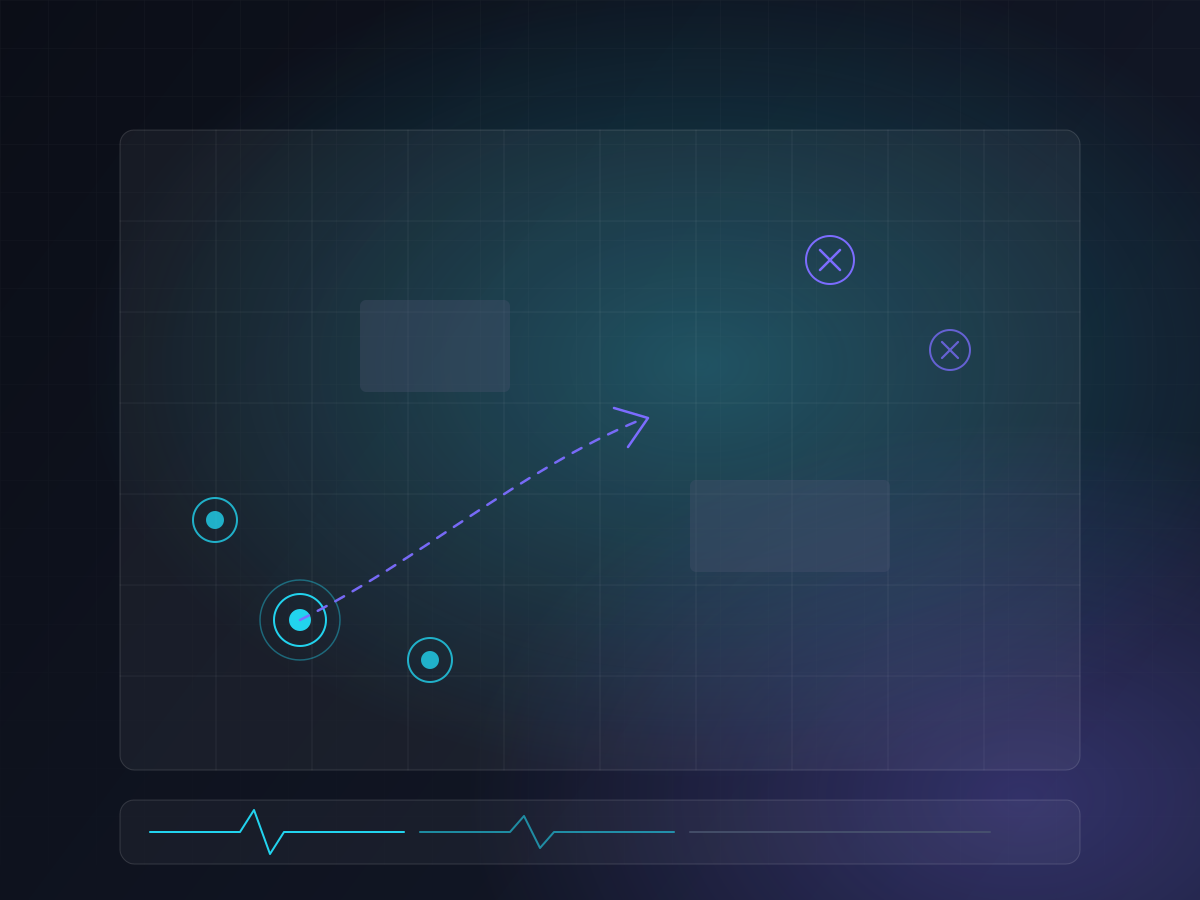
Games are the hardest software most teams will ever ship. Everything is a constraint at once: the frame budget, the content pipeline, the save format, the fact that players will do things no test ever imagined.
We build the parts underneath — simulation, gameplay architecture, data models, tools your designers will actually use — and we build them so they survive contact with production. Deterministic simulation is a particular focus: when the same seed and the same orders always produce the same outcome, you can verify a game instead of hoping about it.
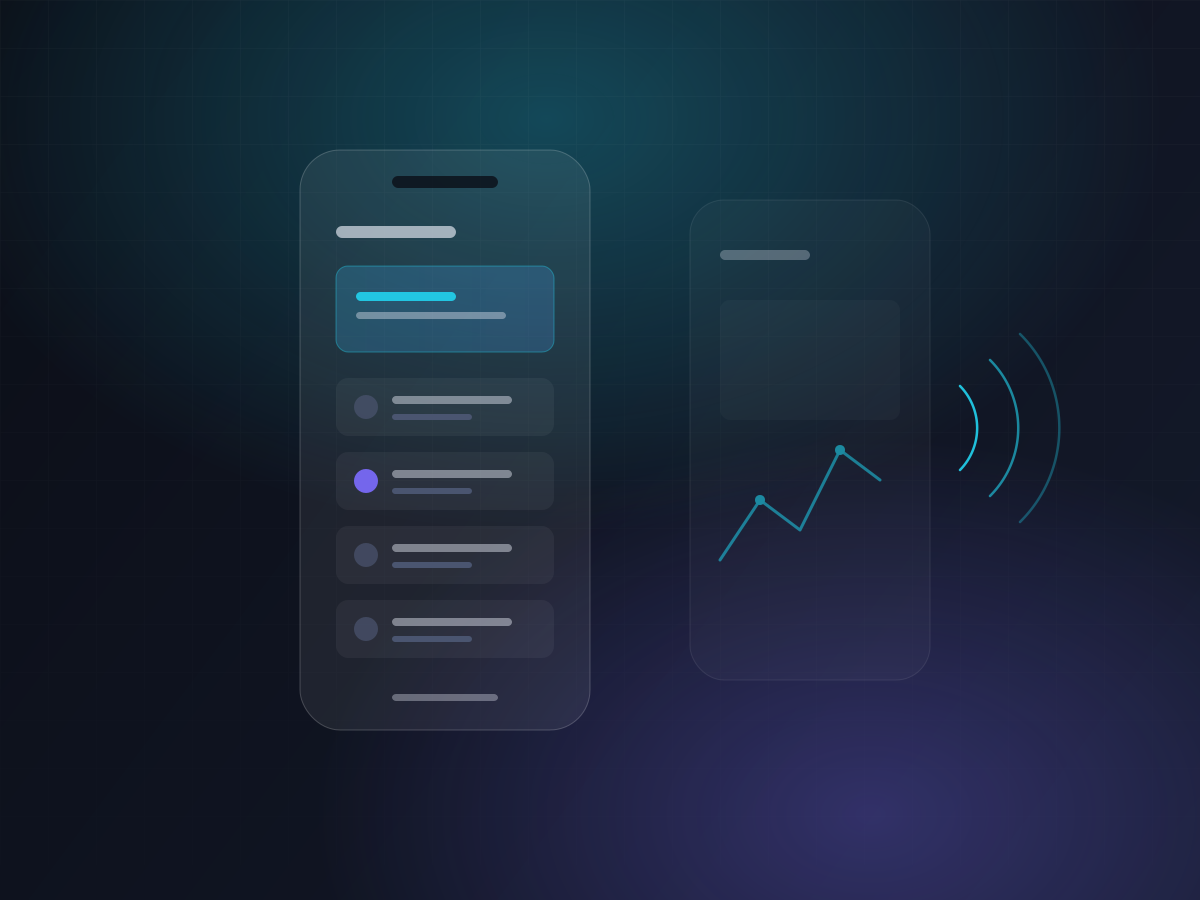
A mobile app is judged in the first ten seconds, on a mid-range phone, on a bad connection, by someone who will not try twice.
We build for that phone and that connection. Native where native matters, cross-platform where it earns its keep, and an offline story decided at design time rather than patched in later. Store submission, crash reporting, and release cadence are part of the work, not an afterthought.
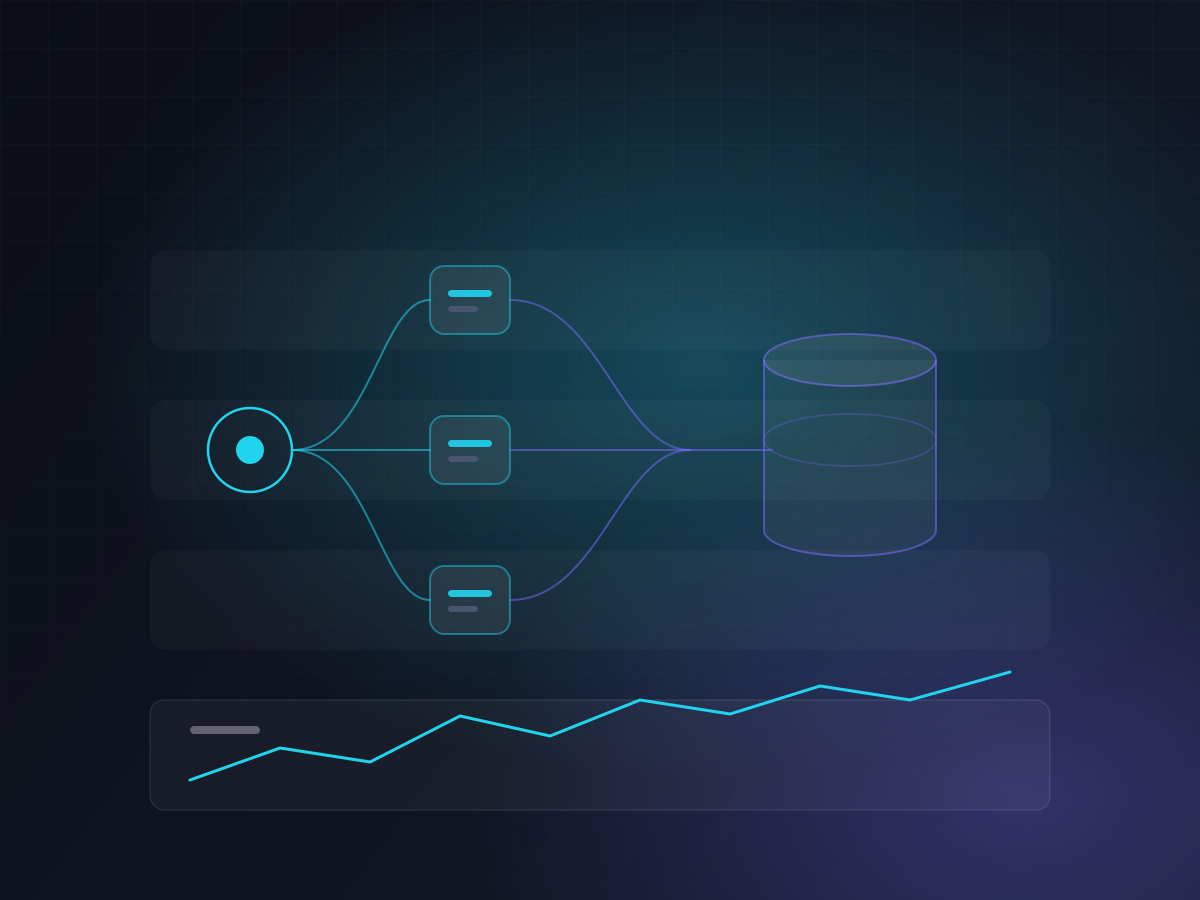
A SaaS product is a promise that the thing will still be running tomorrow, under more load, with more customers, while you change it.
We build the whole shape: the data model that decides how far you can grow, the tenancy boundaries that decide how safely, the deployment path that decides how fast, and the observability that decides how calm the on-call rotation is. We would rather spend a week on the schema than a year on the migration.
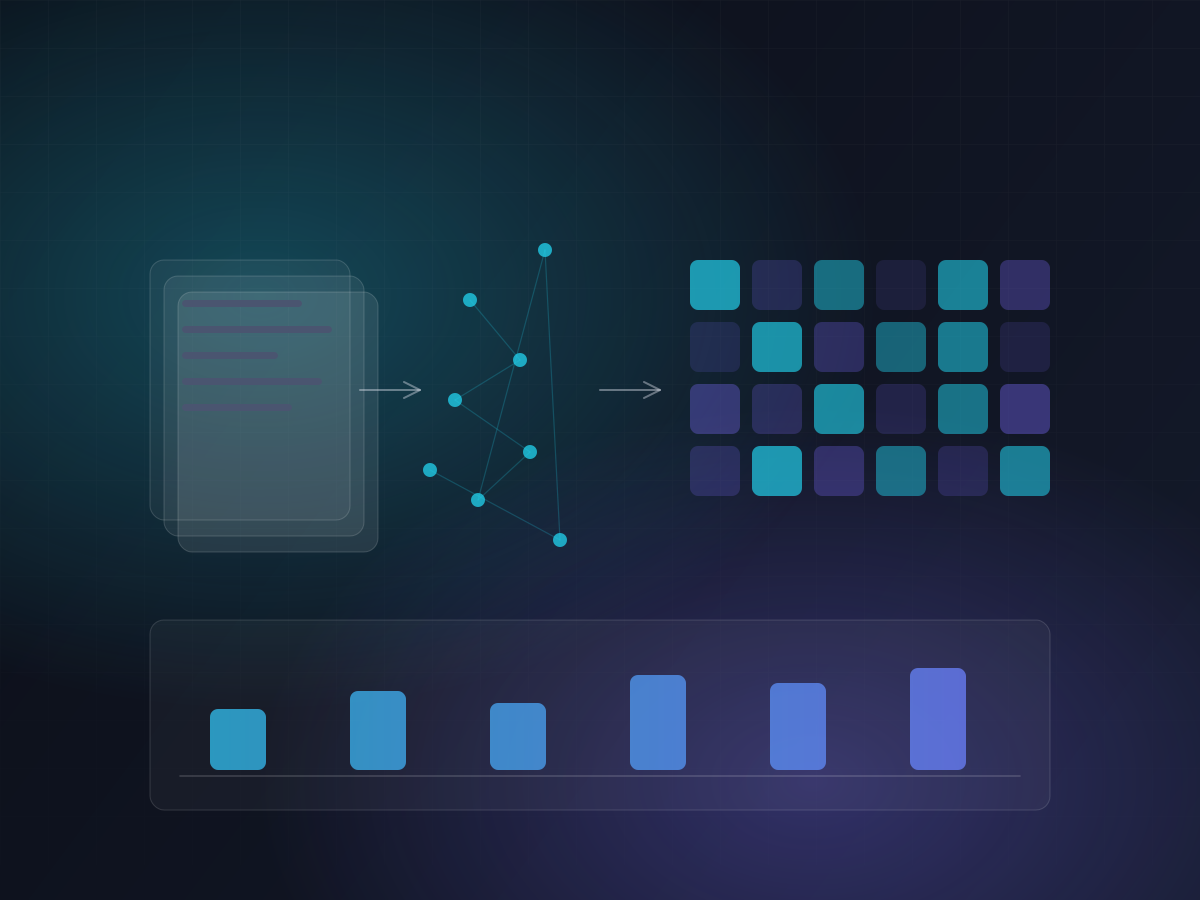
The interesting question about AI is not whether a model can produce something plausible. It is whether the system around it can tell when the model is wrong.
We build that system: retrieval that grounds answers in your data, evaluation that measures quality instead of asserting it, guardrails at the boundaries, and a fallback path for the cases the model should not be trusted with. We are equally willing to tell you when a smaller model, a search index, or ordinary code is the better answer.
Sometimes the thing you need is not more hands. It is someone who has already made this mistake and can tell you what it cost.
We advise on architecture, delivery, and the decisions that are expensive to reverse: what to build versus buy, how to structure a team, when a rewrite is genuinely warranted and when it is a very costly way to avoid a hard conversation. We work in the room and in writing, and we are direct about what we find.
That is a normal place to start. Describe the problem and we will tell you what it actually calls for — including when the answer is less than you expected.
 NimbleJinn
NimbleJinn builds games, mobile apps, SaaS platforms, and AI systems — and advises the teams building their own.
Massachusetts, USA