Every consultancy says it is agile, pragmatic, and quality-focused. Those words have been worn smooth. Here is what we actually do instead.
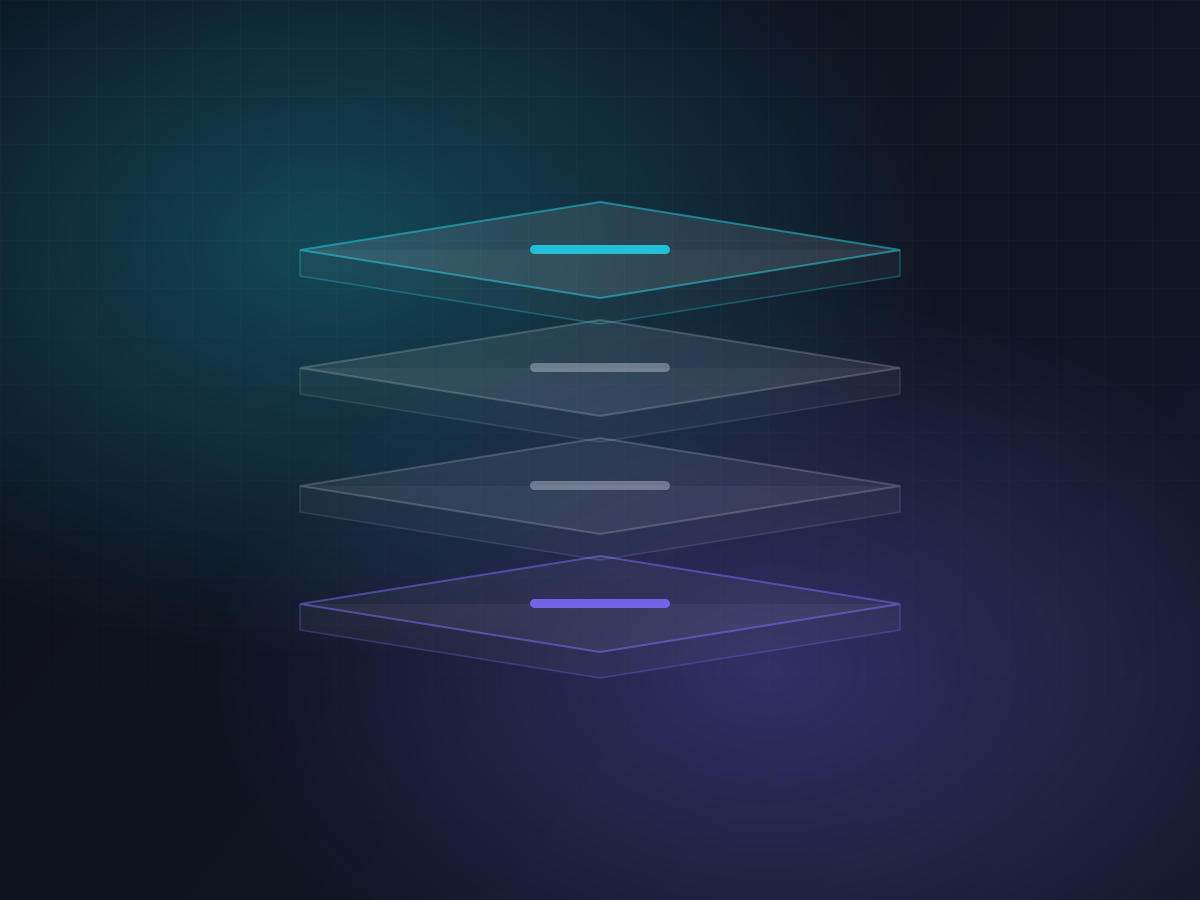
Skeleton first, flesh second. We build the whole shape of a system before we finish any part of it — every screen reachable, every service wired, every layer showing real data, however thin. It feels slower for two weeks and it is dramatically faster after that, because the expensive mistakes surface while they are still cheap to fix.
Short loops, running software. Every cycle ends with something you can open and use. Not a status report, not a demo branch — the actual thing, in the state it is actually in. If a cycle ends with nothing to show, that is information, and we will tell you rather than let it accumulate.
Decisions get written down. When we make a call that would be expensive to reverse, we record what we chose, what we rejected, and why. Six months later, when someone asks why the data model looks like that, there is an answer instead of an argument.
We say the unwelcome thing early. Scope that will not fit, an estimate that was optimistic, an approach that is not working — you hear it from us while there is still room to act on it. That is the whole value of hiring people who have done this before.
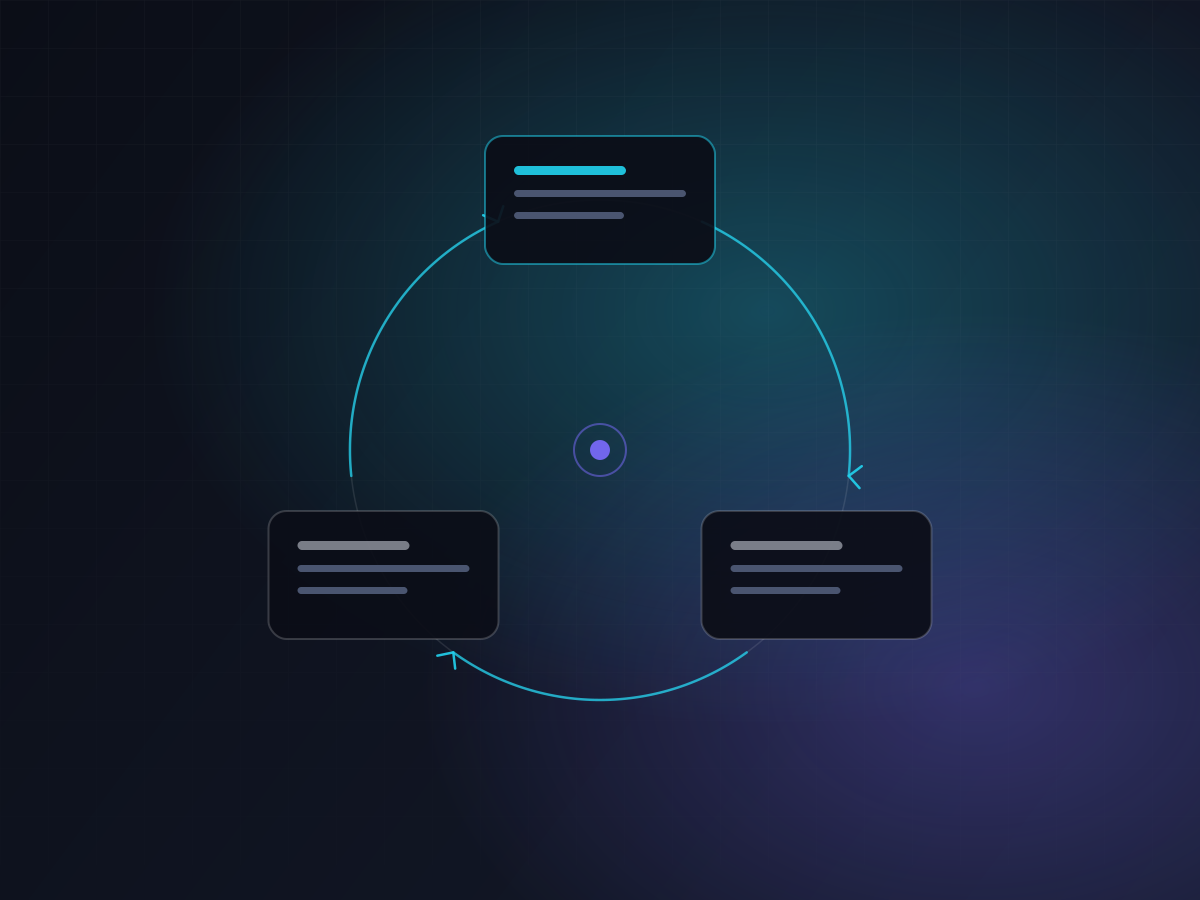
We do not have a house stack we apply to everything. We have a set of questions we ask, and the answers pick the tools.
What is the shape of the data, and how will that shape change? Who operates this in two years? What is the smallest thing that could serve this need, and what does choosing the bigger thing buy? Where is the boring, well-understood option good enough — and it usually is?
In practice we work comfortably across managed cloud and containers, relational databases as the default with good reasons required to depart from them, typed languages on the server, native and cross-platform on mobile, and modern game engines alongside bespoke simulation code. Search, messaging, and data pipelines when the problem calls for them.
What we will not do is choose a technology because it is new, or keep one because it is familiar. Both are the same mistake wearing different clothes.
A green build should mean something. That sounds obvious and it is surprisingly rare.
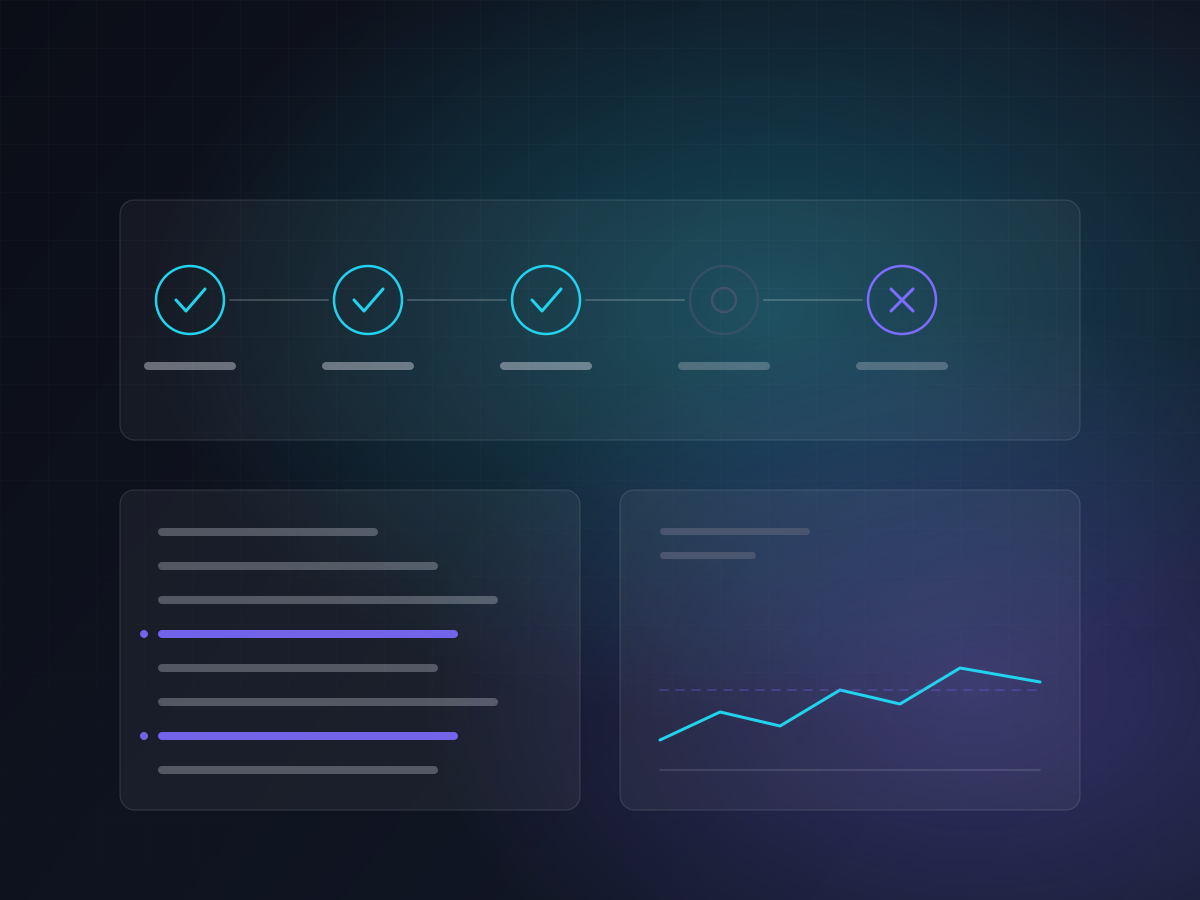
We write tests that would actually fail if the behaviour broke, and we are suspicious of suites that only ever go green. Where a system can be made deterministic, we make it deterministic and then freeze its output as a golden file — so a change that alters behaviour has to be acknowledged on purpose rather than discovered by a user. Where determinism is not available, we test the boundaries and say plainly what is not covered.
Delivery is part of quality. Continuous integration that runs on every change, deployment that is repeatable and reversible, and observability that tells you what is happening in production rather than what you hoped would happen. An alert that fires constantly is not monitoring; it is noise with a pager attached.
Describe the problem and we will walk you through how we would scope it, what we would build first, and where we think the risk is.
 NimbleJinn
NimbleJinn builds games, mobile apps, SaaS platforms, and AI systems — and advises the teams building their own.
Massachusetts, USA